A Look At Japan’s Luna Solar-Ring Around The Moon That Is To Power The Earth With Electricity Forever
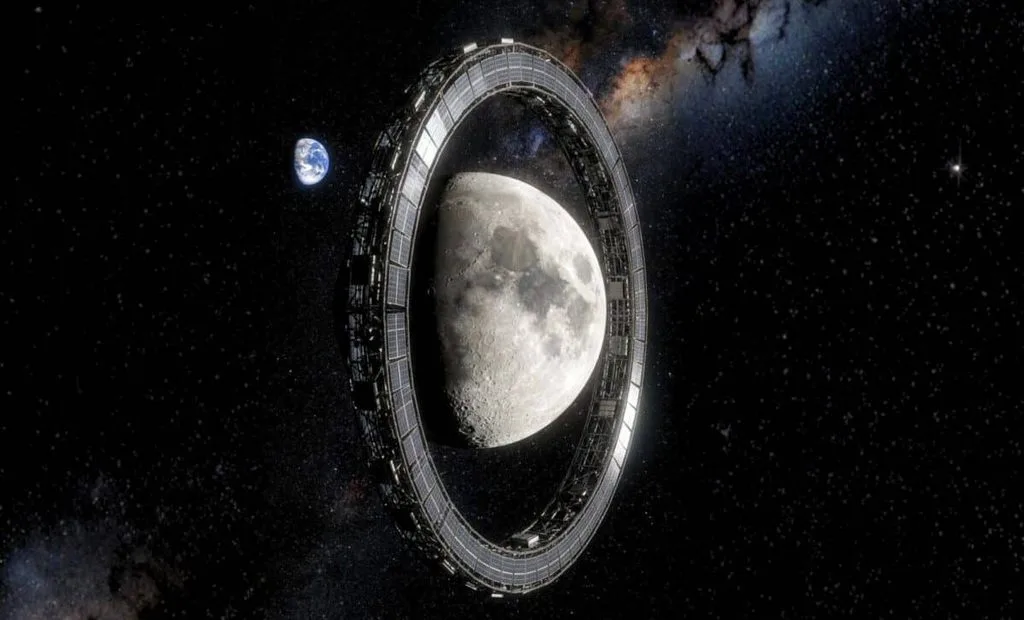
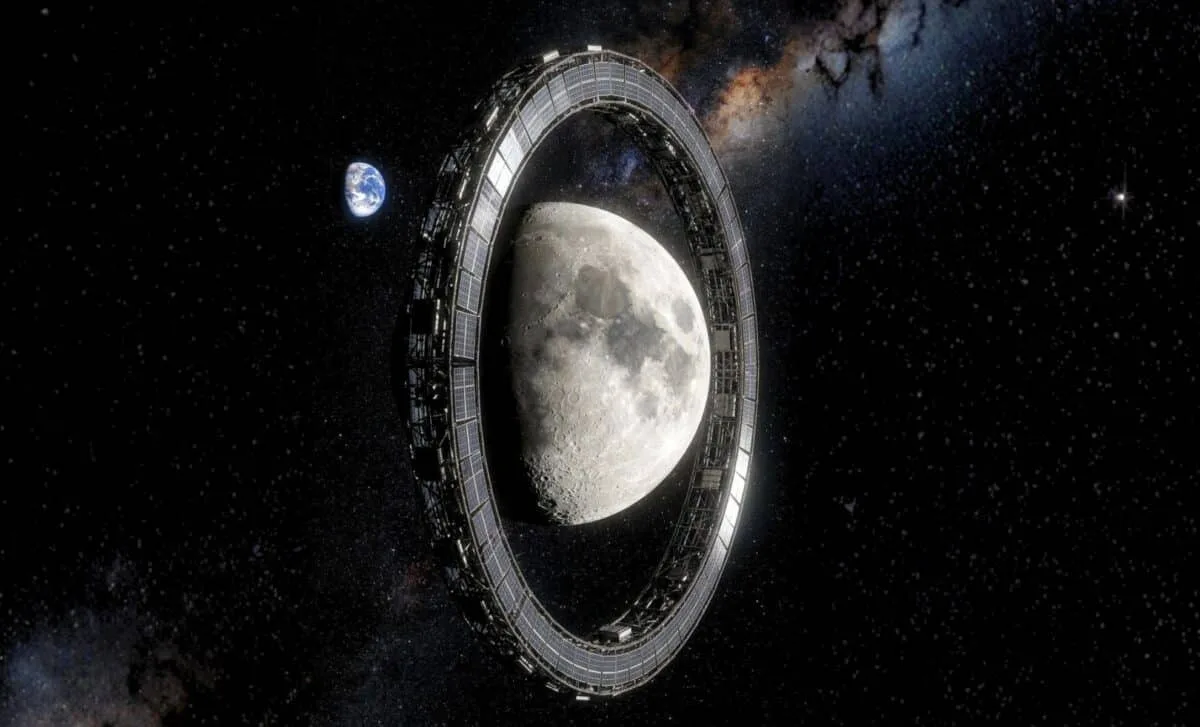
Imagine a future in which the Moon becomes a giant power station, collecting sunlight and transmitting electricity to Earth. It sounds like science fiction, yet a Japanese company has proposed a concept that seeks to turn this idea into reality. Known as the LUNA RING, the proposal envisions a vast belt of solar panels around the Moon’s equator, designed to capture solar energy and send it to receiving stations on Earth.
The concept has attracted attention because of its potential implications for global energy production. However, while the idea is scientifically intriguing, it is important to distinguish between a proposed engineering concept and a project that is actually being built.
The LUNA RING concept was proposed in 2009 by Shimizu Corporation, a Japanese construction and engineering company. Its vision involves installing a continuous belt of solar panels around the Moon’s equator to collect sunlight on an enormous scale.
The proposed system would convert the captured solar energy into electricity and transmit it to Earth using microwave or laser technology. Receiving facilities on the planet would then convert the transmitted energy into usable electricity for homes, industries and other applications.
One of the proposal’s central ideas is to take advantage of the Moon’s environment. Unlike many locations on Earth, the lunar surface does not experience weather in the same way, and parts of its equatorial region could offer extended periods of sunlight. The concept aims to provide a large and potentially more consistent energy supply than conventional solar farms on Earth.
However, the precise performance of a complete lunar solar ring has not been demonstrated. Its projected benefits remain dependent on future engineering advances and practical testing.
Why Has the Idea Generated So Much Interest?
The world faces increasing demand for electricity, driven by population growth, industrial development, digital infrastructure and the expansion of electric vehicles. At the same time, governments and businesses are seeking alternatives to fossil fuels to reduce greenhouse gas emissions.
The LUNA RING concept presents an unusual possible response to these challenges.
The Major Scientific and Engineering Challenges
Despite its appeal, the proposal faces enormous obstacles.
Building a solar installation around the Moon would be extremely difficult and expensive. It would require transporting equipment from Earth, developing construction robots, and possibly using lunar resources. Extreme temperatures, radiation, and lunar dust could also damage the equipment.
Transmitting energy across the 384,400 km between the Moon and Earth would require technologies such as microwaves or lasers. Challenges include energy loss, accurate beam control, and safety. Although wireless power transmission has been demonstrated over shorter distances, large-scale transmission from the Moon remains unproven.
The project would require enormous investment in construction, transportation, and maintenance. It would also compete with cheaper renewable energy sources, such as solar and wind power. Its success would depend on whether the electricity generated could justify the high costs.
Is Japan Actually Building the Lunar Solar Ring?
This is an important distinction.
Shimizu Corporation has presented LUNA RING as a conceptual proposal, but the existence of the proposal does not mean that Japan has approved or begun constructing it.
As of October 2026, there is no established evidence that the full lunar solar ring is under construction or that it has a confirmed operational date. Japan does conduct research into space-based solar power and other advanced space technologies, but such research should not automatically be interpreted as government approval of the LUNA RING project.
Would It Really Power the Earth Forever?
The claim that LUNA RING will “power the Earth forever” is scientifically inaccurate. Although the Sun will continue shining for billions of years, solar panels and other equipment eventually wear out and require maintenance or replacement. Building the system would also not guarantee affordable electricity for everyone, as costs, transmission and distribution remain challenges. If successful, LUNA RING could contribute to global energy supplies, but its actual impact would depend on its efficiency, environmental impact, cost and reliability.
Could Space-Based Solar Power Be a Better Alternative?
The LUNA RING is part of a broader field known as space-based solar power. Researchers have explored the possibility of placing solar collectors in orbit around Earth and transmitting the collected energy to ground-based receivers.
Orbital systems and lunar systems present different engineering problems. Solar collectors in certain Earth orbits could potentially receive sunlight for long periods without the need to construct infrastructure on the Moon. On the other hand, orbital systems would still require large structures, power transmission technology and extensive investment.
Meanwhile, terrestrial renewable energy technologies continue to improve. Solar panels, wind turbines, electricity grids and battery storage can be deployed incrementally, without waiting for the development of large-scale lunar infrastructure.
What Would Success Mean for Humanity?
If a lunar solar ring or a comparable space-based energy system eventually became technically and economically viable, its implications could be significant.
It might diversify global electricity supplies, reduce dependence on fossil fuels and stimulate new industries in space exploration and manufacturing. It could also encourage international collaboration on major scientific and engineering projects.
There would however be environmental considerations, including the resources needed to construct the installation, the effects of extensive space activity and the management of equipment that reaches the end of its useful life.
Conclusion
Japan’s LUNA RING is an ambitious concept for collecting solar energy on the Moon and transmitting it to Earth. However, it faces major technical and financial challenges and has not been proven practical. The claim that it will power Earth forever is an exaggeration. For now, it remains a futuristic vision that could inspire new technologies, while renewable energy sources like solar and wind offer more practical solutions today.